
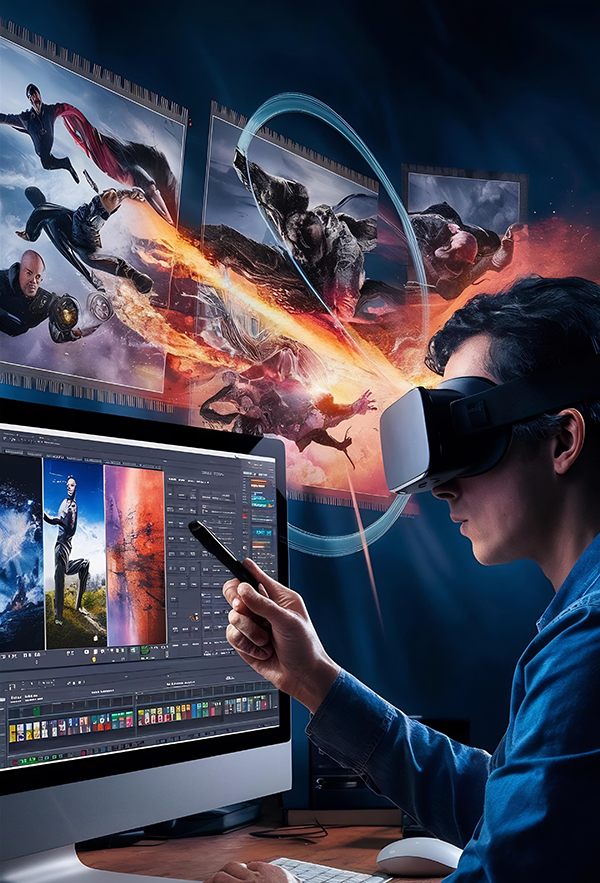
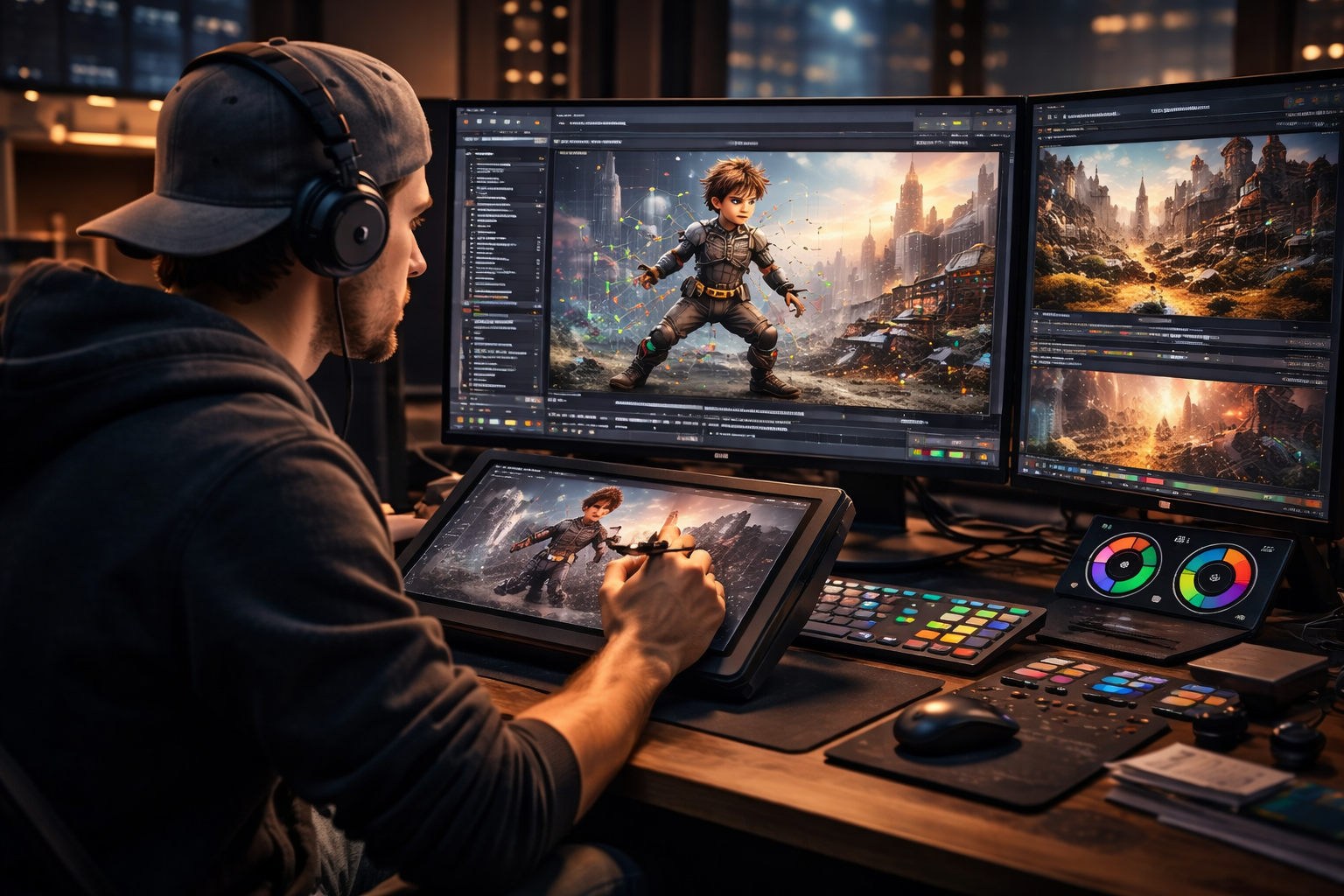
The world of 3D animation is changing faster than ever. What was once a specialized field limited to film studios is now integral to gaming, advertising, virtual reality, education, and virtually every visual medium.
As we approach 2026, the Future of 3D Animation: Trends and Skills 2026 reveals a landscape shaped not only by artistic creativity but also by technological breakthroughs like AI, real-time rendering, virtual production, and immersive experiences.
This article provides a clear, in-depth, and SEO-friendly roadmap to the trends reshaping the industry, the skills in high demand, and how you can prepare for success in the next phase of 3D animation.
Historical Context: Where 3D Animation Has Been
To understand where 3D animation is headed, we first need to look at its evolution.
Early days were dominated by hand-drawn and stop-motion animation. Then came the rise of CGI, where films like Toy Story showcased the potential of computer graphics. Over time, software such as Maya, 3ds Max, and Blender became industry standards. 3D animation expanded into film, gaming, and television, demanding realism and higher fidelity. Today, real-time engines, AI tools, and mobile platforms are transforming workflows.
Understanding this evolution helps contextualize the trends emerging for 2026 and beyond.
Top Trends Shaping the Future of 3D Animation (2026)
1. AI-Assisted Animation Workflows
Artificial intelligence is one of the biggest forces transforming creative industries. AI tools are now capable of automated rigging and skeleton setup, smart motion capture cleanup, AI-driven lip sync from voice tracks, and predictive animation through in-betweening.
Rather than replacing artists, AI handles repetitive tasks so creators can focus on storytelling and artistic direction.
2. Real-Time Rendering with Game Engines
Game engines like Unreal Engine and Unity have become essential in animation workflows. They provide real-time lighting and rendering, instant feedback during design iteration, in-engine cinematic previews, and are widely used in virtual production.
By 2026, real-time tools will be standard in 3D animation pipelines, not just limited to gaming.
3. Virtual Production and In-Camera VFX
Virtual production blends live action and CGI in real time, enabling directors to see final composite visuals on set. Studios use LED volume stages, real-time backgrounds, and dynamic lighting setups.
This approach reduces post-production time and allows greater creative control during filming. The rise of virtual production studios represents a major transformation in how animation integrates with filmmaking.
4. Immersive Experiences: AR, VR & Mixed Reality
Brands and creators increasingly use immersive storytelling to engage audiences. Augmented reality animations enhance marketing experiences, virtual reality builds fully animated worlds and simulations, and mixed reality supports advanced visualization and training.
Animators skilled in XR technologies will be highly in demand by 2026.
5. Procedural and Generative Design
Procedural tools allow artists to generate complex environments using algorithms rather than modeling every element manually. This includes infinite landscapes, automated crowd systems, and AI-generated textures.
These workflows speed up production while maintaining high-quality results.
6. Cloud-Based Collaboration and Distributed Pipelines
Remote production workflows have become common. Cloud platforms allow distributed animation teams to share asset libraries and collaborate in real time.
Studios and freelancers can now work seamlessly across borders, increasing global opportunities.
7. Higher Expectations for Photorealism
Audiences expect increasingly realistic visuals. Achieving photorealism requires advanced lighting techniques, high-quality textures, AI-powered denoising, optimized rendering pipelines, and accurate physics simulations.
The demand for realism will continue growing through 2026.
8. Cross-Platform Storytelling
Animation now exists across mobile games, short-form social media, web experiences, and metaverse platforms. Artists who can adapt content across multiple platforms will gain a competitive advantage.
9. Personalized and Procedural Animation
Animations are becoming adaptive and user-driven. Examples include personalized avatars, dynamic character interactions, and intelligent game NPCs that respond uniquely to each player.
This trend combines AI and procedural animation to create customized experiences.
Essential Skills for 3D Animators in 2026
1. Strong Fundamentals
Despite technological advances, foundational skills remain essential. Animators must master timing, weight, anticipation, character performance, and storytelling through movement.
Strong fundamentals ensure technology enhances creativity rather than replacing it.
2. Software Mastery
By 2026, animators should be comfortable using Blender, Autodesk Maya, Unreal Engine, Unity, ZBrush, and Substance Painter. Understanding multiple tools increases versatility and employability.
3. AI-Enhanced Workflow Knowledge
Studios expect familiarity with AI-driven rigging tools, motion capture automation, animation cleanup systems, and intelligent assistants. Knowledge of these systems improves productivity and efficiency.
4. Real-Time Rendering and Virtual Production
Understanding real-time lighting, shader development, scene optimization, and camera tracking is increasingly important. These skills bridge the gap between animation and game development.
5. Storytelling and Creative Direction
Animation is ultimately about emotion and narrative. Strong storytelling, pacing, cinematic framing, and character development remain timeless skills.
6. Cross-Disciplinary Collaboration
Modern animators collaborate with UX designers, game developers, sound designers, and AI programmers. Understanding these adjacent fields enhances integration within larger projects.
7. Technical Skills: Rigging and Scripting
Technical literacy in areas like Python scripting, pipeline automation, custom tool creation, and asset management helps artists solve complex production challenges.
8. Soft Skills for Remote Work
Global workflows require strong communication, time management, adaptability, and constructive feedback skills. Remote collaboration competence will be critical in 2026.
How AI Is Shaping Animation Jobs
AI enhances productivity rather than eliminating creative roles. Tasks that once required weeks can now be completed in hours.
Emerging job roles include AI animation technicians, real-time animation specialists, VR/AR animation designers, animation data scientists, and cloud pipeline coordinators. As automation grows, the animator’s role becomes more strategic and creative.
Education and Training Paths for 2026
Students preparing for the future should pursue structured degree programs with industry exposure, certification courses in leading software, AI-integrated bootcamps, internships, and strong portfolio development.
A compelling portfolio demonstrating adaptability and real-world projects remains more important than certificates alone.
Career Opportunities in 2026
The future of 3D animation offers opportunities in film and television, game development, XR content creation, advertising agencies, simulation training, and educational technology platforms.
Artists who combine AI knowledge with real-time engine skills will have the strongest job prospects.
Challenges Facing the Industry
The industry faces challenges such as skill gaps, balancing automation with creativity, global competition, rapid technological change, and ethical concerns around AI-generated content.
However, professionals who continuously learn and adapt will thrive.
Preparing for the Future: A Roadmap for Success
Step 1: Master animation fundamentals including movement and performance.
Step 2: Learn essential tools such as Blender, Maya, and Unreal Engine.
Step 3: Build real-world projects to strengthen your portfolio.
Step 4: Integrate AI workflows into your skillset.
Step 5: Stay updated with industry trends and technology releases.
Step 6: Network globally and collaborate with diverse teams.
Conclusion
The Future of 3D Animation: Trends and Skills 2026 presents immense opportunities driven by AI, real-time rendering, immersive technology, and global collaboration.
Artists who embrace new tools while maintaining strong foundational skills will lead the industry forward. If you seek a creative, secure, and technologically advanced career path, now is the perfect time to prepare for 2026 and beyond.
FAQs
- What major trends are driving the future of 3D animation?
AI-assisted workflows, real-time rendering, virtual production, and immersive experiences are the primary drivers. - Do animators need to learn AI to stay relevant?
Yes, AI is increasingly integrated into animation pipelines and enhances productivity. - Which skills are most in demand for 2026?
Storytelling, real-time engine expertise, AI tool knowledge, and strong animation fundamentals. - Will real-time engines replace traditional rendering?
They will coexist. Real-time engines are growing rapidly, but traditional rendering remains essential for high-end production.
5. Is 3D animation a good career choice for the future?
Yes, especially for professionals who continuously upskill and adapt to emerging technologies.