
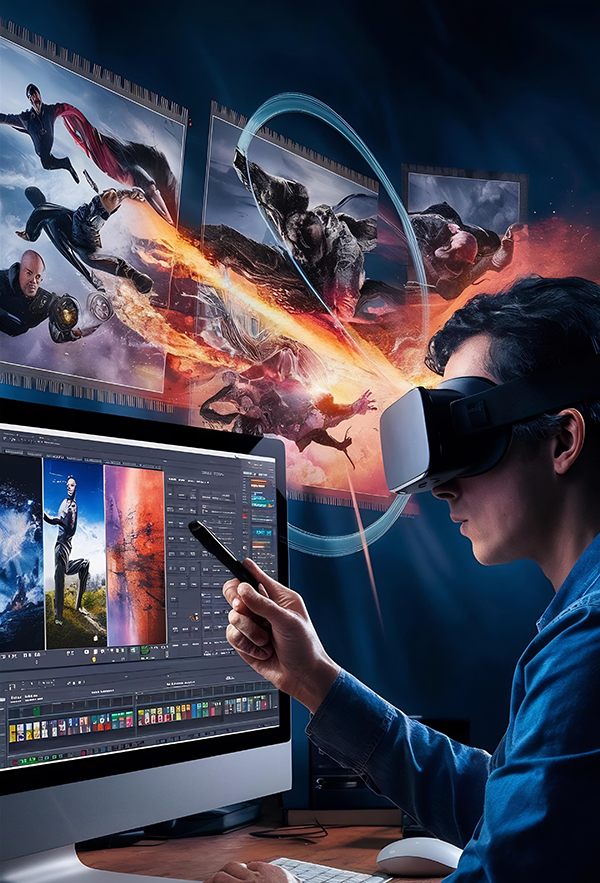
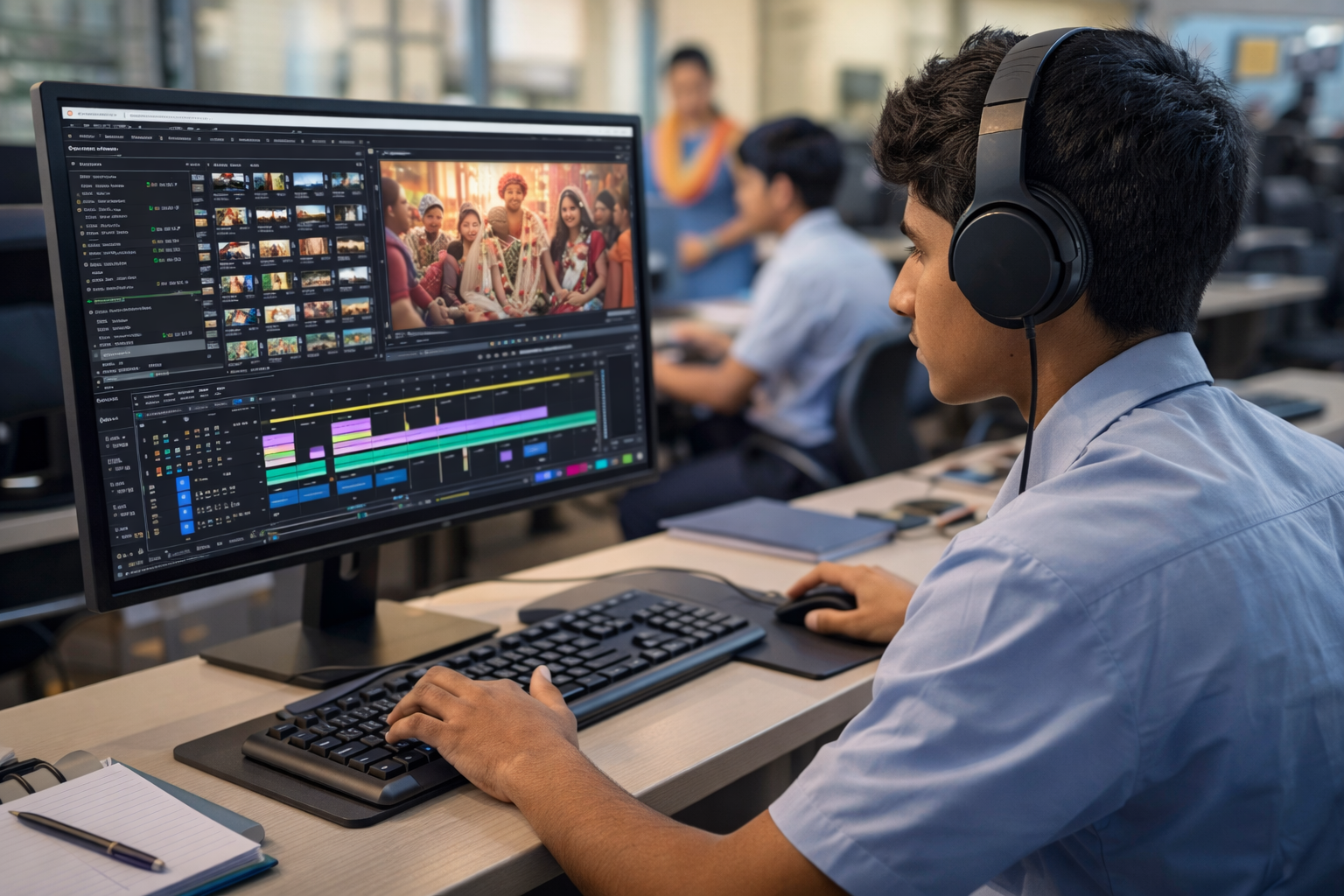
After completing Class 12th, students in India are often unsure about choosing a career that balances creativity and technical skills. One of the most promising career paths today is video editing, a skill at the heart of digital storytelling — whether for films, ads, social media, OTT platforms, or corporate videos.
A video editing course after 12th in India equips students to become professional editors who can craft compelling narratives, build attention-grabbing content, and work with modern multimedia tools.
This comprehensive guide will help you understand:
- What video editing is
- Why it’s a great career choice
- What you learn in a video editing course
- Tools and software you’ll master
- Top colleges and institutes
- Fees and course duration
- Career opportunities and salary
- How to choose the best program
- Future trends and FAQs
What is Video Editing?
Video editing is the process of assembling raw footage into a meaningful, engaging, and polished final product.
It involves:
- Trimming clips
- Creating transitions
- Adding visual effects
- Color correction
- Audio editing
- Motion graphics
- Exporting for multiple platforms
In the digital age, video editors are storytellers. They blend creativity with technical skills to communicate messages visually.
Why Choose a Video Editing Course After 12th in India?
India is experiencing a massive digital boom:
- YouTube has millions of content creators
- OTT platforms are producing original content
- Advertising agencies need skilled editors
- Brands require storytelling videos
- Short-form content on reels and shorts has surged
A video editing course after 12th in India prepares students for this growing demand by teaching them practical skills that employers care about.
Benefits of pursuing this course:
1. Early Career Start
Instead of waiting for a degree, students can start professional training early after 12th.
2. Creative & Technical Blend
Video editing combines artistic storytelling and technical tool mastery.
3. High Demand Across Industries
Digital media, entertainment, advertising, animation, e-learning — all need editors.
4. Freelancing & Remote Options
Video editors can work with clients globally on a freelance basis.
5. Portfolio-Driven Career
A strong portfolio often matters more than degrees in the creative industry.
Who Can Pursue a Video Editing Course After 12th in India?
- Students from any stream (Arts, Commerce, Science)
- Creatives with an interest in media and digital storytelling
- Students who are tech-savvy and visually inclined
- Beginners with a passion for editing and animation
- Freelancers want professional skills
There are no strict academic prerequisites beyond 12th, but a strong interest and focus help.
What You Will Learn in a Video Editing Course After 12th
A good video editing program should balance creative fundamentals with tool-based execution. You will learn:
1. Fundamentals of Editing
- Principles of editing
- Storytelling and pacing
- Continuity editing
- Principles of montage
2. Video Editing Software Tools
Students master industry-standard tools such as:
- Adobe Premiere Pro
- DaVinci Resolve
- Final Cut Pro X (Mac)
- Avid Media Composer (for advanced workflows)
3. Audio Editing and Sound Design
- Syncing audio
- Noise cleanup
- Foley sound
- Music integration
4. Color Correction and Grading
- Basic correction
- Cinematic coloring
- LUT usage
- Visual consistency
5. Visual Effects (Basic to Advanced)
- Green screen (chroma key)
- Motion tracking
- Simple VFX composites
6. Motion Graphics
Often done using:
- Adobe After Effects
- Templates and animation presets
7. Project Workflow & Exporting
- Media organization
- Proxy workflows
- Export settings for platforms (YouTube, TV, social)
8. Portfolio and Demo Reel Building
A strong demo reel that showcases your skills is essential for job interviews and client pitches.
Tools You Will Learn in a Video Editing Course
🛠 Adobe Premiere Pro
Industry-standard editing tool with powerful timeline workflows.
💻 DaVinci Resolve
Free but professional software with advanced color grading.
🍏 Final Cut Pro X
Preferred by many Mac users and studios.
✨ Adobe After Effects
Used for motion graphics and VFX elements.
🎧 Audition / Fairlight
For sound design and audio post-production.
Duration of Video Editing Courses After 12th in India
Course Type | Duration | Level |
Certificate Course | 3 – 6 Months | Beginner |
Diploma Course | 6 – 12 Months | Professional |
Advanced Diploma | 1 – 2 Years | Industry-ready |
Short Online Certification | 1 – 3 Months | Skill booster |
Diplomas and advanced certificates often include projects and internships, which provide better job preparation.
Top Video Editing Institutes in India
(These are generic options and you can tailor them by city or preference.)
🎓 1. National Institute of Film & Fine Arts (NIFFA)
🎓 2. Film & Television Institute of India (FTII), Pune
🎓 3. Satyajit Ray Film & Television Institute (SRFTI), Kolkata
🎓 4. MAAC (Maya Academy of Advanced Cinematics)
🎓 5. Arena Animation (nationwide)
🎓 6. Frameboxx (nationwide)
🎓 7. National Institute of Design (NID) – Media Courses
🎓 8. Private Film Schools in Mumbai & Delhi
Online options include:
- Coursera
- Udemy
- Domestika
- LinkedIn Learning
- Skillshare
Fees for Video Editing Courses in India
Course Type | Approx Fees (INR) |
Certificate Course | ₹10,000 – ₹40,000 |
Diploma Course | ₹50,000 – ₹1,50,000 |
Advanced Diploma | ₹1,50,000 – ₹3,00,000 |
Short Online Certificate | ₹5,000 – ₹25,000 |
Fees vary by institute, facilities, software access, and city.
Skill Set You Will Build After Training
Creative Skills
- Storytelling
- Visual rhythm
- Scene composition
Technical Skills
- Timeline editing
- Color correction
- Audio design
- Rendering workflows
Soft Skills
- Communication
- Team collaboration
- Time & project management
Job Roles After Video Editing Course After 12th
Successful completion of the course opens multiple career paths:
🎥 1. Video Editor
🎬 2. Post-Production Specialist
🎞 3. Motion Graphics Designer
🎨 4. Colorist
🎭 5. VFX Editor
📱 6. Social Media Editor
🎙 7. Freelance Video Editor
Career Opportunities & Salary in India (2026)
Job Role | Average Salary (INR) |
Video Editor | ₹2,50,000 – ₹5,00,000 |
Post-Production Editor | ₹3,00,000 – ₹6,00,000 |
Motion Graphics Artist | ₹3,50,000 – ₹8,00,000 |
Colorist | ₹4,00,000 – ₹10,00,000 |
Freelance Editor | ₹Depends on projects |
Freelance editors with strong portfolios can earn significantly more.
How to Choose the Best Video Editing Course After 12th
🟢 1. Updated Curriculum
Check if the course includes modern tools like Premiere Pro, Resolve, After Effects.
🟢 2. Practical Projects
Hands-on editing and project work build real skills.
🟢 3. Internship & Placement Support
Real work experience enhances job prospects.
🟢 4. Software Access
Prefer institutes that provide licensed tools for training.
🟢 5. Student Reviews
Alumni feedback indicates quality of training.
🟢 6. Demo Sessions
Attend trial classes before final enrollment.
Future Trends in Video Editing (2026 & Beyond)
🔹 AI-Assisted Editing Tools
Smart editing suggestions, auto rough cuts, auto color matching.
🔹 Cloud Collaboration
Remote teams working on the same project in real time.
🔹 Integration With VFX & 3D
Video editors now work closely with VFX and 3D animation pipelines.
🔹 Short-Form Content Domination
Reels, Shorts, TikTok demand hybrid editing skills.
🔹 Real-Time Engines
Unreal and Unity integration for cinematic projects.
Conclusion
Choosing the video editing course after 12th in India is a smart decision if you are passionate about visual storytelling and creativity. The industry’s expansion, versatile career options, and evolving technology make this a rewarding path.
With quality training, hands-on experience with tools, and a strong portfolio, you can start your professional journey early and build a fulfilling career in media, entertainment, OTT platforms, advertising, and digital content creation.
FAQs
1. What is the eligibility for a video editing course after 12th in India?
Most institutes require successful completion of Class 12th in any stream.
2. How long does a video editing course last?
Courses range from 3 months (certificate) to 2 years (advanced diploma).
3. What tools will I learn in this course?
Common tools include Adobe Premiere Pro, DaVinci Resolve, After Effects, Final Cut Pro X, and audio tools.
4. Is video editing a good career after 12th?
Yes — especially with the growing demand for digital content across platforms.
5. Can beginners learn video editing easily?
Yes, most courses start from the basics and gradually build advanced skills.