
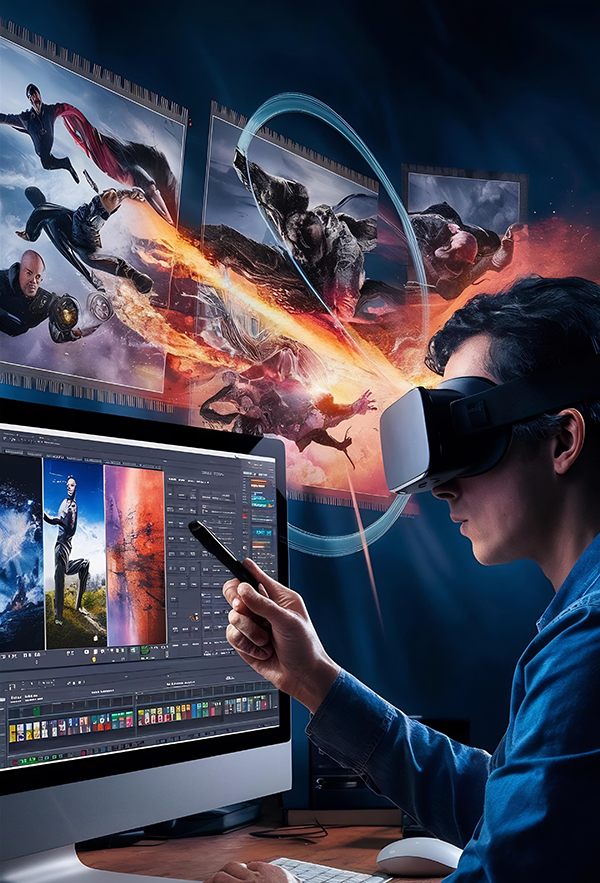
The animation and visual effects industry has always been driven by technology. From hand-drawn frames to 3D CGI and real-time rendering, innovation has continuously reshaped how stories are told. Today, one of the biggest technological shifts is the integration of artificial intelligence into creative workflows.
Understanding AI Tools Used in Modern Animation & VFX is essential for students, professionals, and studios who want to stay competitive. AI is not replacing artists — it is enhancing productivity, improving realism, and reducing production time.
This detailed, SEO-friendly, copyright-free guide explores how AI is transforming animation and VFX, what tools are being used, and what this means for the future of the industry.
The Rise of AI in Animation & VFX
Artificial intelligence is no longer experimental in the creative world. Studios now use machine learning algorithms to automate repetitive tasks, enhance visual quality, and generate realistic simulations.
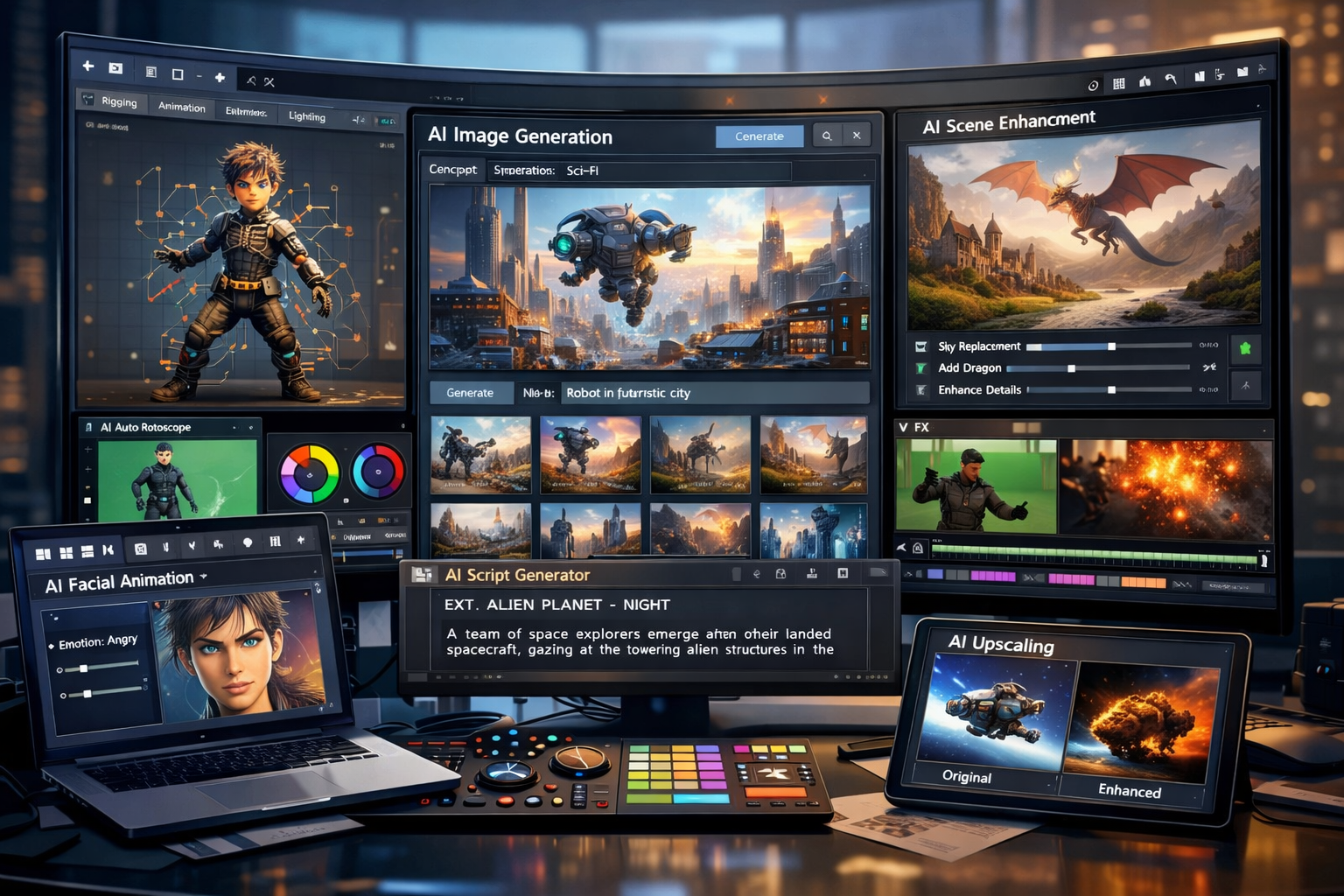
In traditional workflows, animators and VFX artists spent hours manually refining frames. AI systems now assist with tasks like motion capture cleanup, facial animation, rotoscoping, background generation, and rendering optimization.
The adoption of AI tools used in modern animation & VFX has dramatically improved production efficiency while maintaining artistic control.
How AI Is Transforming Animation Workflows
AI is integrated at multiple stages of animation production:
- Pre-production
- Modeling and rigging
- Animation
- Simulation
- Rendering
- Post-production
Instead of replacing artists, AI supports decision-making and speeds up repetitive tasks.
For example, AI-driven motion prediction tools can generate in-between frames automatically, reducing manual workload.
AI Tools for Character Animation
Character animation is one of the most time-consuming processes in 3D production. AI is changing this by enabling automated rigging, motion transfer, and facial animation.
AI-powered systems can analyze video footage and convert real-life movement into digital character animation. This allows smaller studios to achieve cinematic results without massive budgets.
Some AI animation software tools focus on:
- Auto lip-sync generation
- Motion capture enhancement
- Real-time character animation
- AI-based pose estimation
These innovations highlight the growing importance of AI tools used in modern animation & VFX.
AI in Motion Capture
Traditional motion capture requires specialized suits and studio setups. AI-based motion tracking tools now allow motion capture using regular video cameras.
Machine learning algorithms analyze body movement, track joints, and convert them into 3D animation data.
Benefits include:
- Reduced hardware cost
- Faster production
- Improved accessibility
- Real-time feedback
This democratizes high-quality animation production.
AI in 3D Modeling and Asset Creation
Creating 3D models from scratch can take days or weeks. AI tools now assist in generating base models, textures, and environments.
AI-powered asset generation systems can:
- Convert 2D sketches into 3D models
- Generate realistic textures
- Create environment layouts
- Enhance photorealistic detailing
These tools help artists focus on refinement rather than starting from zero.
AI in Visual Effects (VFX)
Visual effects production often involves complex simulations, compositing, and cleanup work.
AI tools used in modern animation & VFX have improved:
- Rotoscoping
- Object removal
- Scene reconstruction
- Background replacement
- Smoke and fire simulations
AI-powered rotoscoping tools can isolate subjects from footage in minutes instead of hours.
AI in Rendering Optimization
Rendering is one of the most computationally intensive processes in animation.
AI-driven denoising algorithms reduce noise in rendered frames, allowing lower sample rates without sacrificing quality.
Benefits of AI rendering tools include:
- Faster render times
- Reduced hardware load
- Improved image clarity
- Cost savings
This has significantly shortened production timelines.
AI in Facial Animation and Lip Sync
Facial animation requires detailed precision. AI tools analyze voice recordings and automatically generate lip movement and facial expressions.
This is especially useful in:
- Game development
- Animated films
- Virtual influencers
- Digital avatars
By automating repetitive facial adjustments, AI increases efficiency without reducing creative quality.
AI in Crowd Simulation
Creating large crowds manually is complex. AI-based crowd simulation tools generate realistic behavior patterns.
Characters respond dynamically to environments and other characters. This technology is widely used in movies and video games.
AI in Pre-Visualization
Pre-visualization helps directors plan scenes before full production.
AI systems can quickly generate scene drafts, camera movements, and lighting suggestions. This speeds up creative decision-making and reduces production risks.
AI in Video Editing and Post-Production
AI-based editing tools assist in:
- Scene detection
- Automatic color grading
- Background music suggestion
- Voice enhancement
- Frame interpolation
These tools enhance storytelling while reducing manual editing workload.
Popular AI Software in Animation & VFX
Several software platforms now integrate AI capabilities into their workflow systems.
Examples include:
- AI-based motion tracking tools
- Real-time rendering engines with AI denoising
- AI-assisted compositing software
- Machine learning-powered asset generation tools
Many traditional 3D software applications now include AI-powered plugins and features.
Benefits of AI Tools Used in Modern Animation & VFX
The integration of AI offers multiple advantages:
- Faster production timelines
- Reduced operational costs
- Improved realism
- Enhanced creativity
- Better workflow efficiency
Studios can focus more on storytelling and artistic direction rather than repetitive technical tasks.
Challenges of AI in Animation
While AI provides benefits, it also introduces challenges.
These include:
- Learning curve
- Ethical concerns
- Job displacement fears
- Data privacy issues
- Over-reliance on automation
Balancing AI assistance with human creativity remains crucial.
Will AI Replace Animators?
A common concern is whether AI will replace animation professionals.
In reality, AI enhances productivity but cannot replace creativity, emotional storytelling, or artistic intuition. Human creativity remains at the core of animation and VFX.
AI tools are assistants, not replacements.
Future of AI in Animation & VFX
The future of AI tools used in modern animation & VFX looks promising.
Emerging trends include:
- Real-time AI rendering
- AI-generated environments
- Virtual production using AI
- Personalized animated content
- AI-driven script visualization
As technology evolves, AI will become more integrated into every stage of production.
How Students Should Prepare for the AI-Driven Animation Industry
Students entering the animation field should:
- Learn traditional animation principles
- Understand AI-assisted workflows
- Stay updated with new tools
- Develop creative storytelling skills
- Build a strong portfolio
Understanding both art and technology ensures career sustainability.
Conclusion
The impact of AI tools used in modern animation & VFX is transformative. From automated rigging to intelligent rendering and real-time simulations, artificial intelligence is redefining creative production.
However, AI does not eliminate the need for skilled artists. Instead, it amplifies human creativity and opens new possibilities in storytelling and visual expression.
As the animation industry continues to evolve, professionals who embrace AI-driven workflows will lead the next generation of digital entertainment.
1. What are AI tools used in modern animation & VFX?
They are software systems that use artificial intelligence to automate and enhance animation and visual effects workflows.
2. Does AI replace animators?
No, AI supports animators by automating repetitive tasks, but creativity still depends on human artists.
3. How does AI improve rendering?
AI-based denoising reduces noise and speeds up rendering time without compromising quality.
4. Is AI important for future animation careers?
Yes, understanding AI tools is becoming increasingly important in modern production pipelines.
5. Can beginners learn AI animation tools?
Yes, many AI-based tools are beginner-friendly and integrated into standard animation software.